

Free Moving Quote
"*" indicates required fields

Living in Virginia Beach VA: Costs, Neighborhoods, and Daily Realities
Living in Virginia Beach VA: Costs, Neighborhoods, and Daily Realities
As of July 1, 2025, Virginia Beach is home to an estimated 453,737 residents, making it the most populous independent city in the Commonwealth of Virginia. While millions of tourists recognize the resort city for its oceanfront hotels and wide sandy shoreline, daily life here extends far beyond the boardwalk. Spanning hundreds of square miles between the Chesapeake Bay and the Atlantic Ocean, the area features a mix of dense urban pockets, established suburban subdivisions, military installations, and expansive tracts of preserved agricultural land.
Deciding to move here requires looking past promotional travel brochures and examining actual municipal data, practical housing expenses, and day-to-day routines. Whether you are relocating for a job, transferring with the armed forces, or simply seeking a coastal community with extensive municipal services, evaluating local realities will help you determine if this coastal city aligns with your household budget and lifestyle goals.
Housing Costs and Real Estate Realities in Virginia Beach Va
Housing forms the largest portion of any relocation budget, and property values in Virginia Beach reflect steady regional demand. According to the U.S. Census Bureau QuickFacts, the median value of owner-occupied homes between 2020 and 2024 reached $382,500. During that same survey period, the median gross rent stood at $1,714 per month.
Home ownership remains popular across the municipality, with an owner-occupancy rate of 65.1%. Buyers will discover that prices vary depending on proximity to water and overall neighborhood age. Inland single-family properties in established neighborhoods like Kempsville or Salem typically offer lower price points than custom homes along the North End oceanfront or the bayside inlets of Great Neck. If you are comparing regional neighborhoods across Hampton Roads, contacting affordable Norfolk moving services can help clarify moving logistics across city borders, as neighboring cities often present distinct tax rates and housing configurations.
Local household earnings generally correspond with these real estate figures. The Census Bureau estimates the citywide median household income at $92,968 (measured in 2024 dollars for the 2020 to 2024 period). While strong incomes support purchasing power, buyers must also factor in real estate taxes, homeowners association dues, and specific hazard insurance policies that frequently apply in coastal zones.
Varied Neighborhoods and Geographic Boundaries
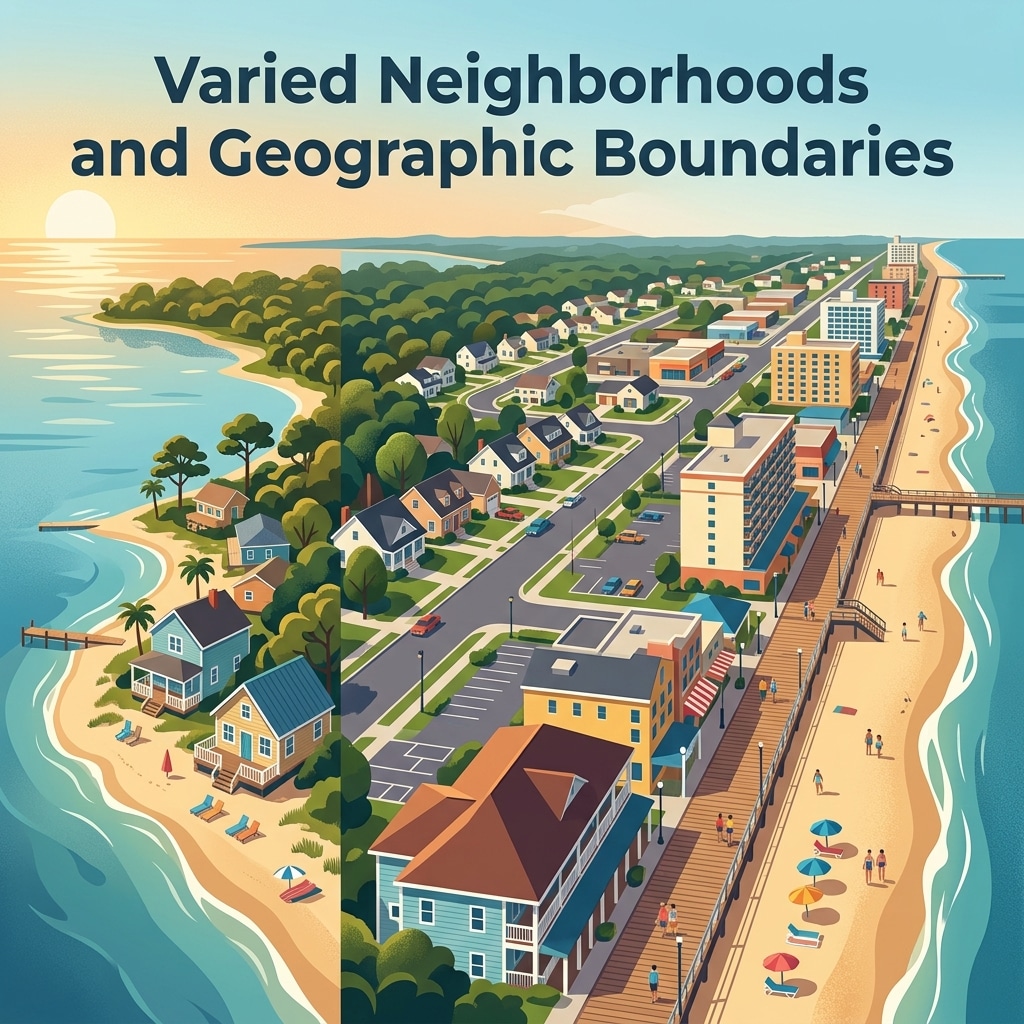
The municipal boundary covers a remarkably wide geographic footprint. The city officially describes its territory as sitting between the Chesapeake Bay and the Atlantic Ocean, encompassing an oceanfront resort strip, commercial corridors, quiet residential communities, and active military facilities.
To the north, neighborhoods along the Chesapeake Bay (known locally as the Chic’s Beach or Shore Drive area) provide a relaxed, casual waterside atmosphere. Residents here often gather on bay beaches that have smaller waves than the oceanfront. Moving east toward the Atlantic coastline, you reach the Oceanfront district. This area contains the famous three-mile boardwalk, oceanfront hotels, and nightlife spots, alongside quiet residential roads tucked immediately behind the primary tourism strip.
Central districts like Town Center, Princess Anne, and Kempsville supply the primary commercial core. Town Center functions as an urban downtown featuring multistory office complexes, retail centers, and high-rise apartments. Meanwhile, communities in the southern half of the city offer a completely different visual setting.
Many newcomers are surprised to learn that southern Virginia Beach contains roughly 26,000 acres of active farmland. Under municipal land-use guidelines detailed by the city in a report on
rural preservation, established growth boundaries protect active agricultural operations and open space from unchecked suburban expansion. This policy keeps southern communities like Pungo, Black water, and Creeds distinctly rural, featuring roadside farm stands, equestrian stables, and large acreages that contrast sharply with the busier northern corridors.
According to municipal descriptions maintained by the Virginia Beach Police Department, the city blends urban centers, historic rural expanses, extensive military installations, and varied residential districts within a single jurisdiction. Understanding these internal divides helps incoming residents pick a neighborhood that aligns with their lifestyle, whether they prefer a high-density urban condo, a mid-century coastal cottage, or a quiet home on multiple wooded acres.
Virginia Beach Commuting, Traffic, and Getting Around
Navigating Virginia Beach on a daily basis requires a clear plan for personal transportation. Data from the U.S. Census Bureau indicates that the mean travel time to work for residents is 23.4 minutes. While this average commute compares favorably to larger metropolitan hubs, travel times fluctuate widely depending on which highway corridors you use and whether your route crosses regional bridge-tunnels into Norfolk, Portsmouth, or Hampton.
The city’s transit system relies primarily on bus routes operated by Hampton Roads Transit (HRT). Although bus service connects key commercial districts, military facilities, and residential hubs, Virginia Beach remains a predominantly automobile-dependent community. The city identifies driving, walking, and bicycling alongside public buses as standard modes of transit, but most households rely on private vehicles for their daily routines.
Regional road congestion presents an ongoing challenge for local drivers. The city formally adopted its 2040 Master Transportation Plan on April 21, 2026, to address long-term infrastructure needs and regional travel patterns. In its municipal planning documents, the city cautions that rush-hour traffic backups and limited alternative transit options can make moving between regional employment centers difficult. Interstates such as I-264 experience heavy volume during peak morning and evening travel periods, particularly as commuters travel between residential developments and naval installations or regional corporate offices. If you plan to work in an adjacent city, assessing traffic patterns along key arterial routes during regular commute hours is critical before finalizing a home purchase or signing a lease.
Parks, Recreation, and Outdoor Lifestyle in Virginia Beach

Beyond its Atlantic and Chesapeake Bay shorelines, Virginia Beach offers an extensive municipal park system designed to support outdoor activity throughout the year. The city parks department manages 293 park sites and more than 7,000 acres of parkland and natural reserves across the community. These properties encompass neighborhood playgrounds, conservation tracts, forested green spaces, and launch points for kayaks and paddle boards.
For indoor recreation and community programming, the city operates seven modern recreation centers distributed across different geographic districts. These facilities feature indoor pools, fitness rooms, gymnasiums, and organized youth and adult athletic leagues. Because these centers function under municipal oversight, residents enjoy access through budget-friendly annual memberships or daily visitor passes.
Public park lands also provide convenient access to hiking and cycling. Multi-use paths wind through suburban areas and conservation parks, allowing residents to stay active away from motorized traffic. Water access points along local waterways, such as the Lynnhaven River, North Landing River, and Broad Bay, make it easy for residents to participate in fishing, boating, and paddle sports just minutes from their front doors.
Managing Flooding and Coastal Resiliency in Hampton Roads
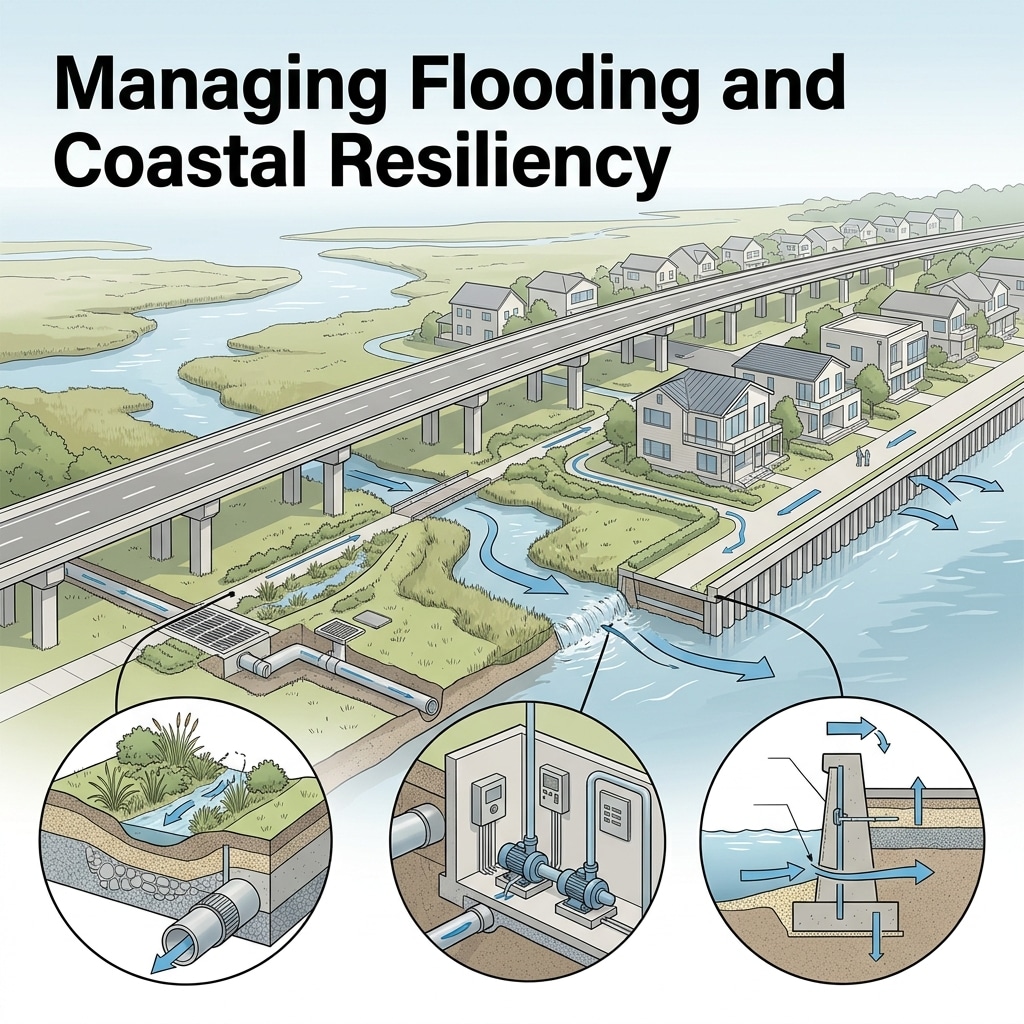
Due to its low-lying coastal terrain, tidewater inlets, and exposure to seasonal storms, flooding is a fundamental reality of daily life in Virginia Beach. Flood vulnerabilities vary dramatically across the city. Some properties located along sheltered inland ridges sit safely outside high-risk flood zones, while waterfront neighborhoods, low-lying bay communities, and tidal creek borders regularly face standing water during high tides or heavy rainfall events.
Municipal leaders and residents have taken proactive steps to confront these challenges. In November 2021, voters approved a comprehensive resiliency bond package to fund significant storm-water and flood-defense infrastructure. As outlined by the city’s Flood Protection Program, ongoing and planned capital projects include major drainage network improvements, mechanical pump stations, automated tide gates, and protective physical barriers designed to mitigate tidal and storm-water surges.
When shopping for a home or rental property, prospective residents should investigate site-specific risk profiles rather than assuming conditions are uniform across an entire ZIP code. Checking parcel-level elevation certificates and official flood maps allows you to evaluate water hazards accurately. In addition to physical safety considerations, residing in a designated special flood hazard area directly affects monthly carrying costs through mandated flood insurance premiums, which can add substantial recurring expenses to a standard mortgage payment.
Weighing Daily Life in Virginia Beach
Living in Virginia Beach provides a distinctive balance of coastal recreation, economic stability, and geographic diversity. A healthy median household income of $92,968 supports a solid standard of living, and an average commute time under 24 minutes makes daily travel manageable for many residents who work within city limits. The city’s investment in more than 7,000 acres of park space and dedicated recreation centers ensures broad access to leisure opportunities regardless of neighborhood location.
At the same time, practical challenges require thoughtful consideration. The median home value of $382,500 and a median gross rent of $1,714 demonstrate that coastal housing demands a solid financial foundation. Reliance on personal motor vehicles remains high, with regional rush-hour bottlenecks posing real hurdles for cross-city commuters. Furthermore, coastal environmental pressures demand active awareness of localized flood risks and proper property insurance coverage.
By balancing these everyday logistics against the benefits of extensive municipal services, varied neighborhood atmospheres, and premier oceanfront access, prospective newcomers can make an informed, confident move to Virginia’s largest coastal city.
GET YOUR FREE MOVING QUOTE TODAY
Don’t let moving become overwhelming. With our trusted Virginia Beach movers, you’ll get the experience, care, and efficiency you need. From packing and transport to specialty moves, we’re here to make sure everything goes smoothly.
📞 Call us today or request a free, no-obligation moving quote online. Let’s make your next move simple, safe, and stress-free. 757-234-7080
Proudly Serving Virginia Beach, Norfolk, Chesapeake, Suffolk, Newport News, Hampton, Williamsburg, Portsmouth, Elizabeth City NC, Yorktown Va, Isle of Wight, and James City County
Sandbridge, Green Run, Pungo, Croatan, North End, Lago Mar, Chics Beach, Runaway Bay Apartments, The Pearl At Marina Shores, Kempsville Community, Princess Anne, Great Neck, Bayside, Lynnhaven, Oceana, Red Mill
